



processo di rivestimento a rotolamento
Roll bonding cladding is a pivotal surface engineering process for manufacturing bimetallic plates, tubes, and components essential in sectors like petrochemical, metallurgy, and infrastructure. As global industries shift toward higher quality, longevity, and environmental performance, hot roll bonding cladding and advanced roll bonding cladding equipment have rapidly become key drivers of innovation, cost-effectiveness, and product reliability. This article deeply explores technology parameters, competitive trends, manufacturing workflows, and global application cases — all centered around the flagship product: Cladding Rolling Mill . Industry Insight: According to Mordor Intelligence , the global roll-bonded clad plate market size was valued at over USD 4.56 billion (2022) , expected to grow at a CAGR of 5.7% through 2030, driven by robust demand in oil & gas, chemical, and desalination industries. Major end-users require plates conforming to ISO 9001 , ASTM B898 , and ASME SA264 . I. Roll Bonding Cladding : Key Technical Parameters Parameter Typical Value Industry Standard Bonding Strength >350 MPa ASTM B898, ISO 15614 Layer Thickness Tolerance ±0.2 mm GB/T 8165 Surface Roughness (Ra) <1.6 μm ISO 8503-1 Max Plate Width Up to 3500 mm Customized Bonding Rate ≥ 99.5% ASME SA264 Corrosion Resistance Passes 720 hr NSS ISO 9227 Applicable Base Materials CS, SS, Ni Alloys DIN EN 10088, ASTM A240 Clad Layer Materials 304/316L, Ti, Cu, Ni, Al On Demand II. Manufacturing Process: Step-by-Step Roll Bonding Cladding Workflow 1. Material Preparation (Raw base plate & clad surface cleaning) 2. Stacking & Fixturing (Alignment & vacuum degassing) 3. Preheating Up to 1000°C (in furnace) 4. Rolling Hot rolling mill (multi-pass, reduction 30–80%) 5. Bond Inspection Ultrasonic & shear testing (ISO 15614-7) 6. CNC Finishing Cutting, edge machining, surface brushing Illustration: roll bonding cladding process, key nodes highlighted III. Product Focus: Cladding Rolling Mill A. Materials & Process Engineering Material Options: Carbon Steel, Stainless Steel, Nickel alloys, Titanium, Copper Clad Layer: 304/316L, Inconel 625, Alloy 2205, Cu, Ti, Al, customizable Manufacture: Casting, forging, CNC cutting, and hot/cold rolling Surface Pre-cleaning: Shot-blasting, pickling (ISO 8501), SPM degreasing Inspection: Ultrasonic, X-ray, Hydrostatic test, per ISO 15614, ASTM A578 Certification: ISO 9001, CE, ASME, PED, TUV, SGS B. Application Industries Petrochemical, Oil & Gas pipelines Desalination, water treatment Power generation (boiler, HRSG) Pressure vessels, reactors Marine/offshore structure Metallurgy plants, mining C. Cladding Rolling Mill : Major Technical Specs Max Rolling Force: 4000–7000 Ton Width Range: 700–3500 mm Thickness (Input): 8–150 mm Thickness (Output): 2–80 mm Max Line Speed: ≤15 m/min Layer Uniformity: Δ ≤ 0.15 mm Bond Rate: 99.8% (ultrasonic tested) Roll Material: Forged alloy steel (HRC 70+) PLC System: Siemens S7, ABB, Mitsubishi optional Life Cycle: Over 20 years, >10,000 operation cycles View Product Details IV. Industry Data Visualization: Market, Specs & Performance Figure 1: Roll Bonding Cladding Market Share by Industry (2023) Figure 2: Cladding Rolling Mill vs Traditional Mill: Technical Performance Figure 3: Steel Clad Plate Exports (Main Regions, 2018–2024) V. Global Manufacturer Comparison: Cladding Rolling Mill vs International Players Company Main Product Plate Width (mm) Rolling Force (t) Bond Rate (%) Certification Warranty Beijing YWLX Cladding Rolling Mill 700–3500 7000 99.8 ISO, ASME, CE 3 yrs SMS Group (DE) Hot/Cold Plate Mill 600–2800 4300 98.8 ISO, TUV 2 yrs Danieli (IT) Composite Mill 1000–2500 5000 98.9 CE, ISO 2 yrs POSCO E&C (KR) Clad Plate Mill 500–2000 4000 99.2 ISO, KS 1.5 yrs VI. Custom Solution Development & Application Showcases Beijing YWLX provides fully tailored roll bonding cladding solutions as per unique production needs — from specific clad/base material pairing to process flow, PLC integration, and automated defect detection. A team with over 15 years' experience ensures solutions comply with ISO 9001, ASME, PED, GB150 etc. Project delivery includes on-site installation, commissioning, and operator training. 1) Oil & Gas Transmission Location: Sichuan LNG Terminal, China Scope: 6km clad pipeline (X70/MS) using roll bonding cladding Achievement: Corrosion incidents reduced by 88% (2-year data) Reference Standard: SY/T 6622, API 5LD 2) Desalination Equipments Location: Al-Khobar, Saudi Arabia Scope: 5mm Ti/CS bimetallic plates (Q235 + TA2) Achievement: 11.5% energy saving achieved (as per SGS audit) Main Process: Hot roll bonding cladding + CNC edge trimming 3) Chemical Reactor Retrofit Location: Gelsenkirchen, Germany Scope: Clad shell upgrade (16MnR+316L) Result: Service life extended 2.5x (documented by TÜV SÜD) Testing: UT, radiographic, shear per ISO 15614-7 VII. Technical Advantages of Roll Bonding Cladding and Clad Pipe Welding Uniform Metallurgical Bonding: Seamless interface layer, ensures high load & fatigue resistance Superior Corrosion and Wear Protection: Up to 30x life in saline, acidic environments (per ISO 9227 NSS, 720h) Design Flexibility: Clad layer thickness 1-30 mm, plate up to 3500 mm width Cost Effective: Base metals optimize strength, clad only where needed — saves 41–68% on high alloy costs Process Repeatability: PLC-automated control, online flaw detection (UT, FPI), batch-grade traceability Clad Pipe Welding: Specialized technology for overlap control, clad pipe welding ensures corrosion-free, pressure-rated piping per API 5LD/ISO 3183 Environmentally Responsible: Hot roll bonding cladding reduces waste, CO 2 emissions cut by 23% vs. traditional overlay welding Customer Voice (Chevron Americas): "After adopting YWLX's cladding rolling mill, our turn-key clad plate output rose by 36%, and pipeline defect rate dropped below 0.1% — exceeding our former benchmarks and third-party audit targets." VIII. Professional FAQs: Roll Bonding Cladding Technical FAQ Q1. What are the primary materials used for base and clad layers in roll bonding cladding ? A: The base is mostly carbon steel, low alloy or boiler plate (e.g., Q235, SA516), while the clad layer can be austenitic stainless steel (304L, 316L), nickel alloys (Alloy 825/625), titanium, or copper. Selection is dictated by end-use corrosion and strength demands. Q2. How is the bond quality between layers assured? A: Each plate or pipe undergoes non-destructive testing (ultrasound per ISO 15614-7, etc.), shear testing, and local metallographic sampling. A minimum bond strength (>350 MPa, typically) is validated before release. Q3. What is the typical clad-to-base thickness ratio and what tolerances can be achieved? A: For plate, 2–20 mm clad over 8–120 mm base (ratio 1:5 to 1:20) is common. Using Cladding Rolling Mill control, thickness tolerances down to ±0.15 mm are achievable, surpassing standard hot rolling. Q4. Which global standards are referenced for roll bonding cladding and clad pipe welding ? A: Major relevant standards: ASTM B898 (bonded clad plate), ASME SA264 (specification), ISO 15614-7 (weld qualification), API 5LD (clad line pipe), GB/T 8165 (Chinese bimetal plates). Q5. What are the recommended installation and inspection procedures for clad pipes? A: Weld surfaces must be free of cracks and defects, with end prepping (beveling) per ISO 9692-2 or ASME B31.3. After clad pipe welding , UT and hydrostatic tests ensure integrity, and interlayer corrosion is checked according to client specs. Q6. What after-sales service and technical support does YWLX provide? A: YWLX offers a 3-year mechanical & control system warranty for Cladding Rolling Mill , overseas commissioning, operator technical training, and lifetime remote diagnostic support with 24/7 quick-response hotline. Spare parts guaranteed for ≥10 years. Q7. What is the typical delivery cycle, and what project documentation is supplied? A: Typical lead time is 120–180 days ex-works, including FAT, painting, and main power-on testing. Documentation includes material certs, NDE/UT/visual inspection reports, PLC program backups, O&M manuals, and project as-built dossier per ISO/CE. Delivery & Quality Commitment: All Cladding Rolling Mill systems are manufactured under ISO 9001 & ASME quality control; standard lead times 4–6 months; robust after-sales and 3-year warranty; technical response within 24 hours; assisted process optimization for client-specific production. IX. References & Further Reading [1] "Roll Bonded Clad Plate Market – Growth, Trends, COVID-19 Impact, and Forecasts (2024-2030)", Mordor Intelligence, Link [2] ASTM International, "ASTM B898 - 11 Standard Specification for Reactive and Refractory Metal Clad Plate", Link [3] ASME, "Specification for Clad Steel Plate for Pressure Vessels", Link [4] China Bimetallic Plate Industry Forum, "Physical Performance Analysis of Hot Roll-Bonded Plates", Link [5] Offshore Technology, "Clad Pipe Welding Techniques and Failure Analysis", Link [6] Tian, Y. et al., "Defects and Testing of Roll Clad Plates", Journal of Materials Processing Technology, 2022, Link

We have successfully executed over 500
projects around the world,
many first-of-their-kind
research projects and products in China, including
We have successfully executed over 500
projects around the world,
many first-of-their-kind
research projects and products in China, including
-
2004
The 1st hydraulic AGC system for hot rolling of ribbon steel
-
2006
The 1st AFC system used for 1450mm skin pass mill
-
2009
The 1st 5-stand tandem line with 2-stand POR & Uncoiler for 650mm ribbon steel
-
2012
The 1st reversing mill for 1380mm strip
-
2016
The 1st soft-rolling system used in skin pass mill
-
2019
The 1st fully automated medium-width tandem cold rolling mill
-
2021
The 1st 5000KN Twin-stand double skin pass mill
-
2022
The 1st coupled pickling line & tandem cold mill with two modes - big roller & small roller
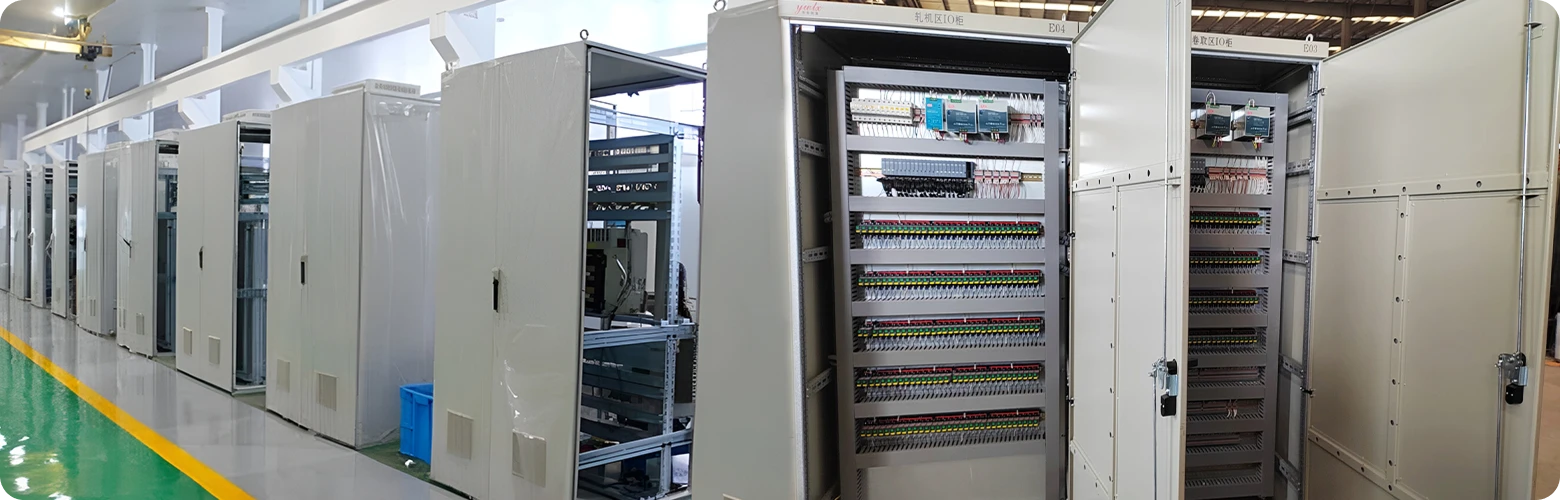

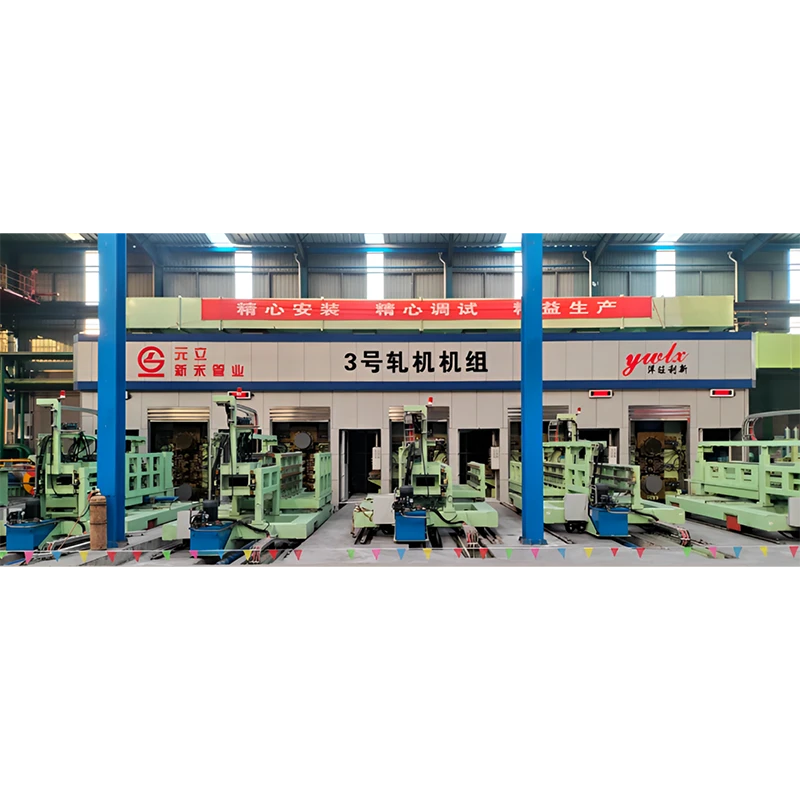
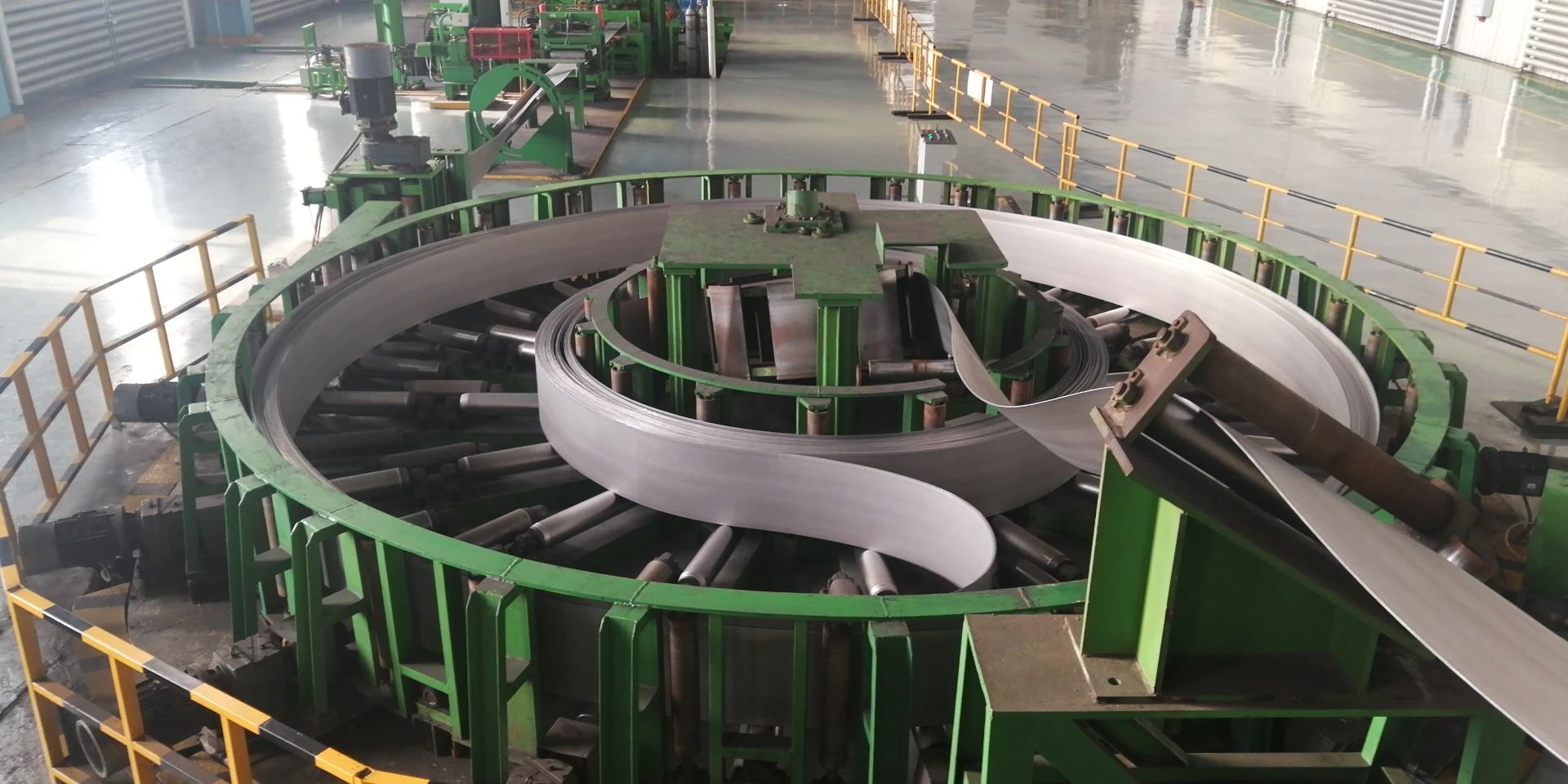
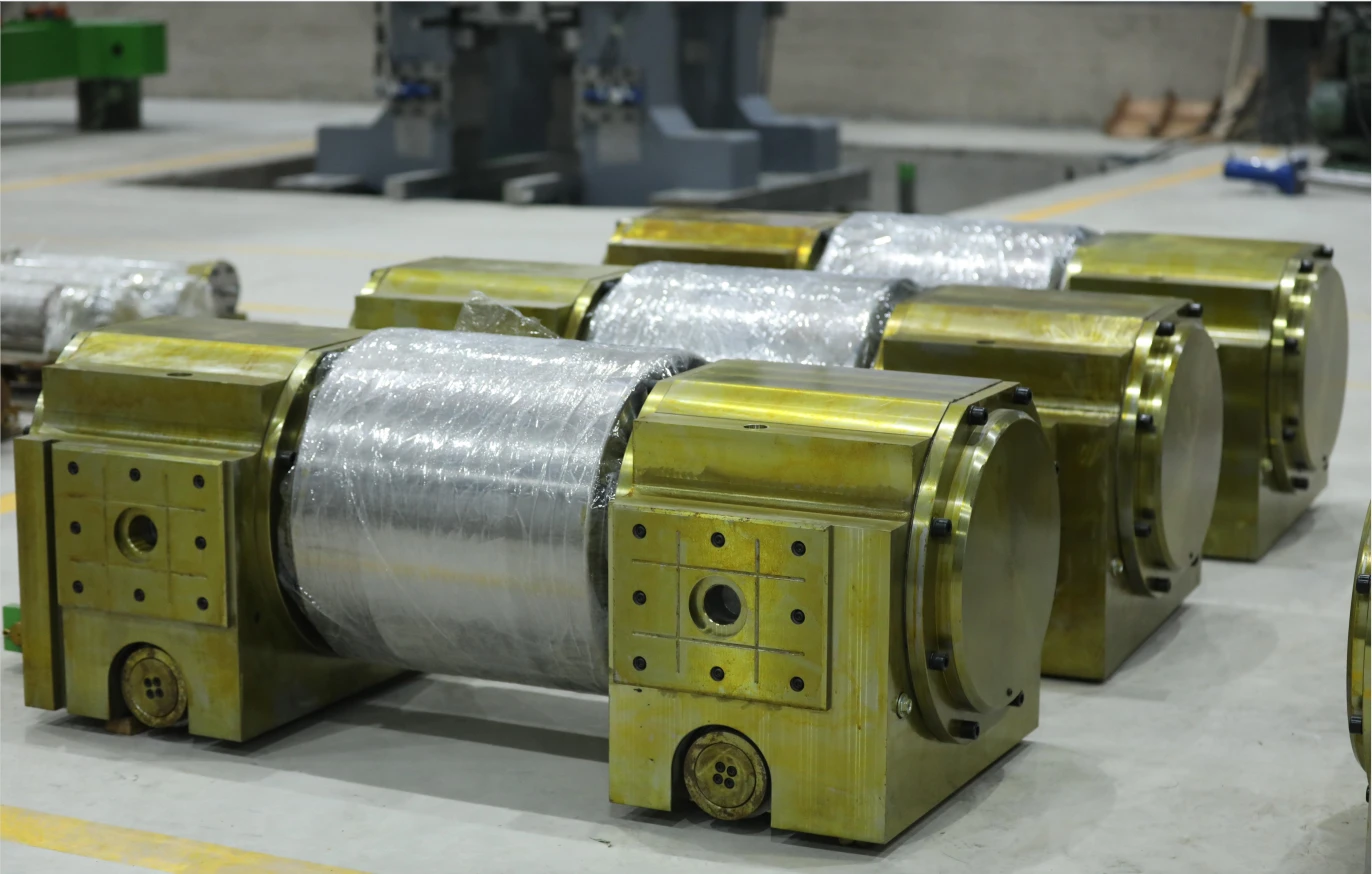
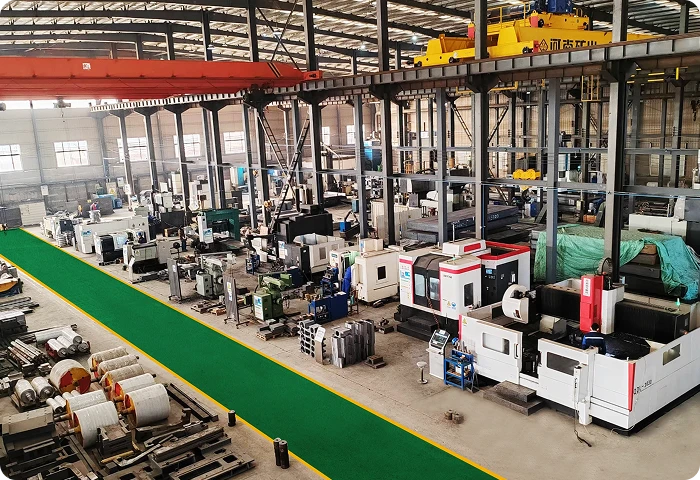
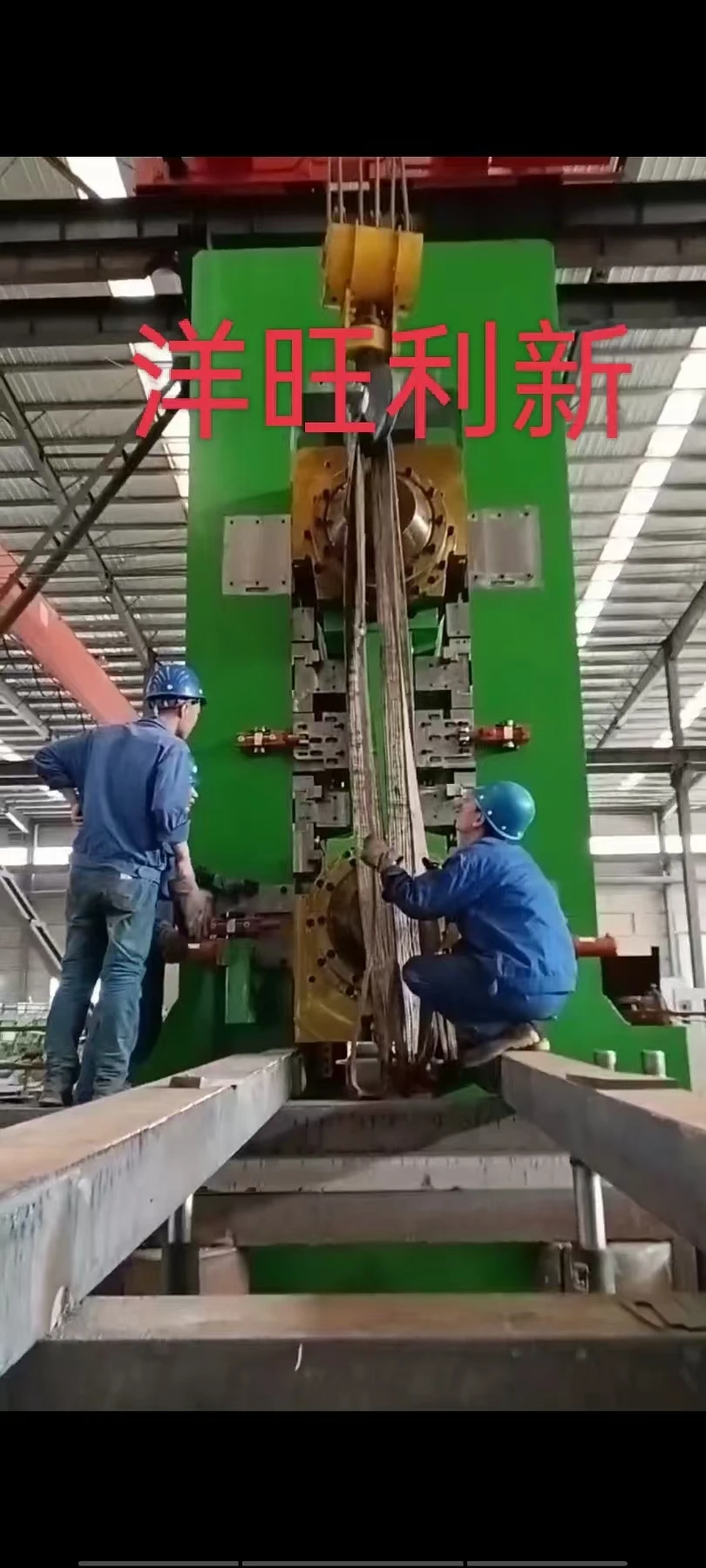
Yang Wang Li Xin operates a state-of-the-art facility over 66,000 square meters,and our manufacturing facility is fully equipped with high-tech machinery and high-capacity cranes. This enables us to handle large work pieces measuring 4.5m in width, 10m in length, and 1.5m in height, guaranteeing our capacity to produce 1800mm skin-pass mills and 1450mm rolling mills. The individual piece can weigh up to 100 tons.

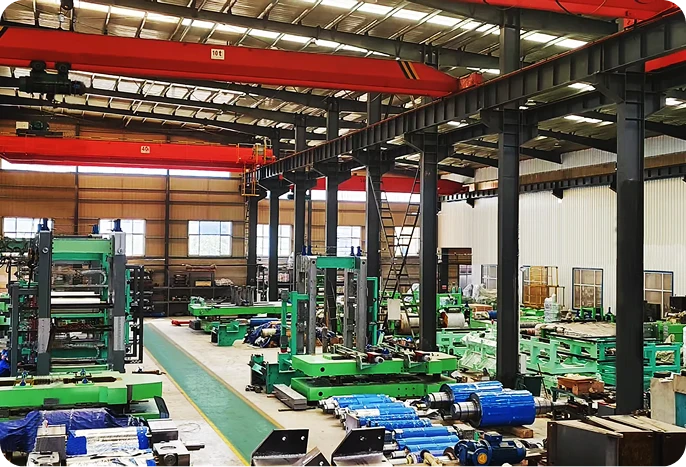

Quality is fundamental to the enterprise survival. We have established a comprehensive and meticulous quality management system and have successfully obtained ISO14000 certification. Starting from the design source, it supervises the entire production cycle, including design, procurement, processing, assembly, in-factory testing, installation, and online commissioning. The workshop is equipped with measuring tools like vernier calipers, spectrometers, hardness testers, and ultrasonic flaw detectors. They are used to check materials and control tolerances to ensure the final equipment meets or exceeds requirements. All products have a unique code, This enables the easy identification and traceability of the equipment components and ensures full control of quality.


-
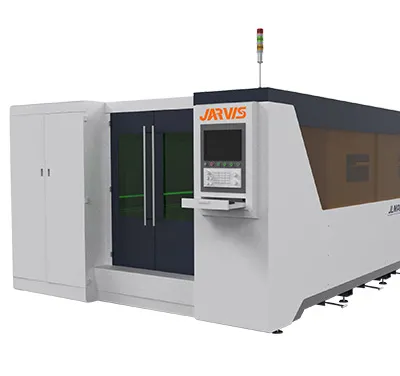 Comparison Between Reversible Cold Rolling (RCM) and Continuous Cold Rolling (CCM) in Modern Steel ProductionThe steel manufacturing industry relies heavily on two principal cold rolling methodologies: Reversible Cold Rolling (RCM) and Continuous Cold Rolling (CCM). These distinct approaches to metal forming each offer unique advantages that cater to different production requirements and product specifications. The reversing cold rolling mill represents a flexible solution particularly suited for small t
 -
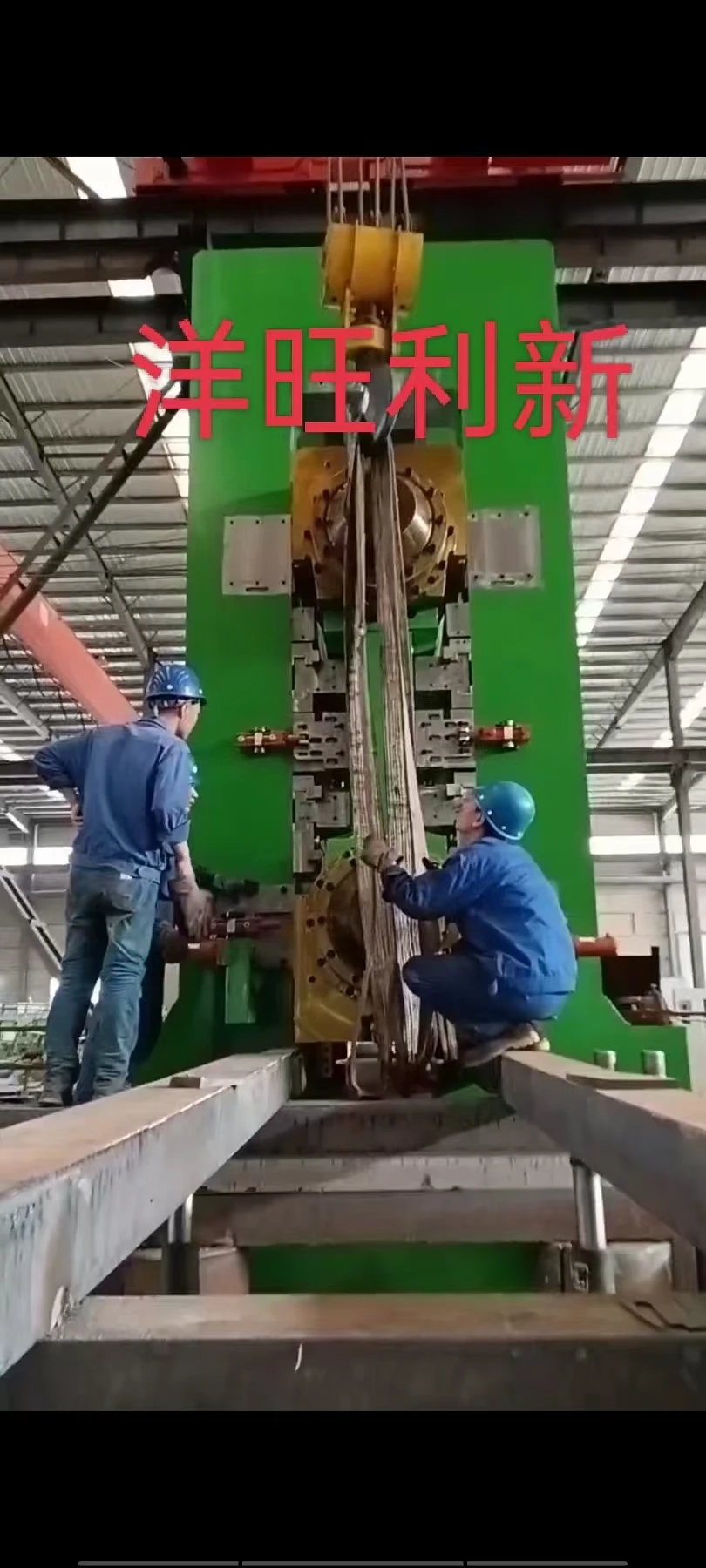 roll bonding claddingUnderstanding the Importance of Original Mill Manufacturers in the Steel Industry In the broader context of the steel industry, original mill manufacturers play a pivotal role in shaping the future of construction, automotive, and numerous other sectors reliant on steel. Given the keywords produttore originale laminatoi, it is essential to delve deep into the value this specific niche offers, emph
 -
 Selecting the Right Skin Pass Mill for Galvanized and Aluminized CoilsThe selection of an appropriate skin pass mill represents a crucial decision for processors handling galvanized and aluminized coils, where surface quality and mechanical properties demand exceptional precision. Unlike conventional rolling operations, skin pass rolling serves as the final refining process that imparts the exact surface characteristics and mechanical enhancements required for premi


